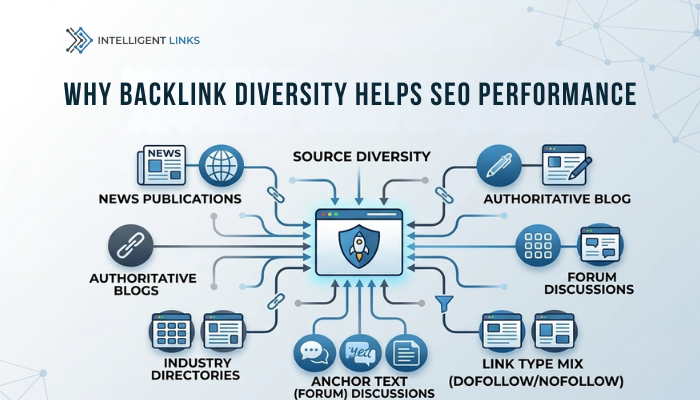
Backlink diversity tells Google your site has earned trust across a wide range of websites and sources. When different publications, blogs, and communities reference your content, it signals that your business is credible and valued by a broader audience.
The problem is that many link-building strategies prioritise volume without paying much attention to source variety. That can leave you with a lopsided profile that doesn’t send the strong trust signals Google looks for.
The team at https://www.intelligentlinks.com.au has audited enough sites to know this is where many businesses plateau, regardless of how long they’ve been investing in SEO. To help clear up the confusion, we put together this guide.
You’ll learn what backlink diversity means, what a healthy profile looks like, and how to broaden your sources without starting over. Let’s get into it.
A Link Profile That Looks Too Clean Is Actually a Red Flag
A profile filled with perfectly placed, same-type backlinks may not look authoritative to Google. Instead, it can seem manufactured. Real websites rarely earn links in such a predictable way.

As sites grow naturally, they attract links from a mix of sources. Some come from news sites. Others come from blog comments, directories, or industry forums. The referring domains differ in size, age, and niche, which creates the kind of pattern Google expects to see from genuinely earned authority.
A profile that lacks this variety can look unnatural, even when each individual backlink is legitimate. It can also raise questions about how they were acquired. That doesn’t mean link quality isn’t important. It is, but so is building a profile that reflects how websites naturally earn attention and trust.
The Five Types of Backlink Diversity (And What Each One Signals to Google)
Backlink diversity breaks down into five distinct dimensions, and each one sends Google a different signal about your site. Here’s what each one covers:
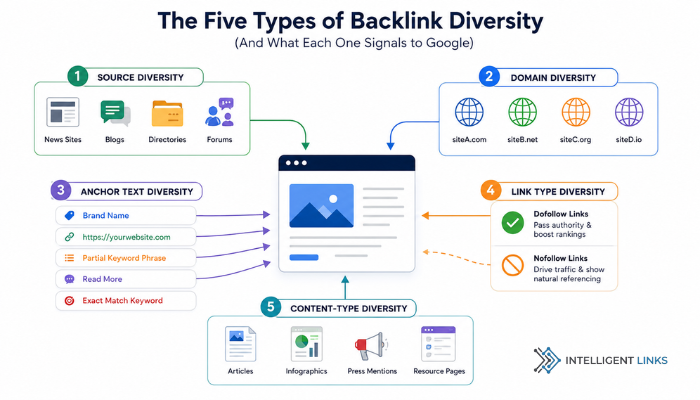
- Source Diversity: Your backlinks should come from a mix of platform types, including news sites, blogs, directories, and forum profiles. A profile that relies on just one type of source can look narrow, even when those individual pages are strong.
- Domain Diversity: This refers to how many unique websites are pointing to you. Ten references from ten different domains signal broader trust than multiple links from a single site.
- Anchor Text Diversity: Anchor text is the clickable text used in a link. A healthy profile has a mix of your brand name, your URL, partial keyword phrases, and generic terms like “read more.” Exact-match keywords have a place in that mix too, but they shouldn’t dominate it.
- Link Type Diversity: Dofollow links contribute directly to domain authority, while nofollow links show your site is being referenced naturally. A healthy mix of both reflects how real sites link to each other.
- Content-Type Diversity: Strong backlinks come from a range of formats, including articles, infographics, press mentions, and resource pages. Relying too heavily on a single content format limits how widely your content can be referenced.
Together, these five dimensions paint a clear picture for Google. A diverse profile shows that people across different corners of the internet have found your site worth mentioning. The goal is to build exactly this trust signal.
How to Tell If Your Own Link Profile Lacks Diversity
Pull up your backlink profile in Ahrefs or Semrush and look at it honestly. A few things should stand out immediately if diversity is the problem.
First, check where your links are coming from. If the vast majority are guest posts or niche edits from DR 40 to 70 sites (domain rating, a measure of a site’s authority), you’re running a monoculture. Google’s algorithm is good at detecting repetitive patterns, and a profile like that is an easy target. One update targeting that pattern can undo months of work overnight.
Next, review your anchor text distribution. If a single phrase accounts for more than 20 to 25% of your backlinks, it can make your profile look unnatural. Because exact-match keywords are easy to overuse, especially when links are built deliberately.
If either of those checks raises a concern, your profile probably needs more variety. And you don’t have to start from scratch to fix it.
Building a More Diverse Link Profile Without Starting Over
You don’t need to undo everything you’ve already built. Backlink diversity develops gradually, and improving it often means expanding your approach rather than starting from scratch.
So start by identifying what’s missing most. If source diversity is the biggest gap, focus on adding links from sources you currently lack. You can start building that variety through a few practical approaches:
- Guest Posts on Relevant Sites: Guest posts remain one of the most reliable ways to earn links from new domains, but only when placed on websites your audience actually reads. Being featured in a publication your customers trust carries more weight than appearing on several sites with no connection to your industry.
- Brand Mentions: If another website has already mentioned your business, you’re halfway there. In many cases, a short, personalised email is enough to get a link added to that existing mention. Just avoid generic templates and explain how linking to your site would make the page more useful for their readers.
- Content Marketing: Good content attracts attention without you having to ask for it. This could be a useful guide, original research, or a practical resource that other sites naturally reference. Over time, that exposure helps you earn mentions from a wider range of websites than outreach alone.
- Forum Profiles and Blog Comments: These won’t move rankings on their own, but they still help round out your profile. When they come from relevant discussions and genuine contributions to the conversation, they add a layer of variety that complements stronger editorial placements.
The goal is to make deliberate choices that move your profile toward variety rather than doubling down on what’s already overrepresented. That balance is what helps your profile look more natural and sustainable to the search engines.
See also: Elevate Your Home’s Style and Security with Pineapple Roofing and Exteriors
Diversity Is What Makes a Link Profile Defensible Long-Term
A narrow profile is fragile. If most of your authority comes from one link type or one cluster of domains, you’re one algorithm shift away from losing it. The problem is, you don’t get advance warning when Google changes how it evaluates those patterns. By the time you notice the impact, previously stable rankings may already have slipped.
On the other hand, a diverse backlink profile is harder to dismantle. When your authority is spread across a wider mix of sources and signals, a single algorithm change is less likely to undermine everything you’ve built. That’s what makes diversity the most reliable long-term investment in your search engine rankings.
Ready to Stop Gambling With Your Rankings?
If this article made you want to open Ahrefs and check your anchor text distribution, good. That instinct is right. Most SEOs already have links. What they’re missing is variety, and the fix starts with knowing exactly where their profile is lopsided.
Here’s what to take away:
- A diverse profile reflects how websites naturally earn attention: varied, imperfect, and spread across many sources.
- Anchor text, source mix, domain spread, and link attributes all influence how Google interprets your authority.
- You don’t need to rebuild everything. Focus on the areas where your profile lacks variety and strengthen them gradually.
At Intelligent Links, we build backlink profiles with long-term stability in mind. If your profile is too heavily concentrated in one area, we can help you broaden it with a strategy designed to support sustainable rankings.